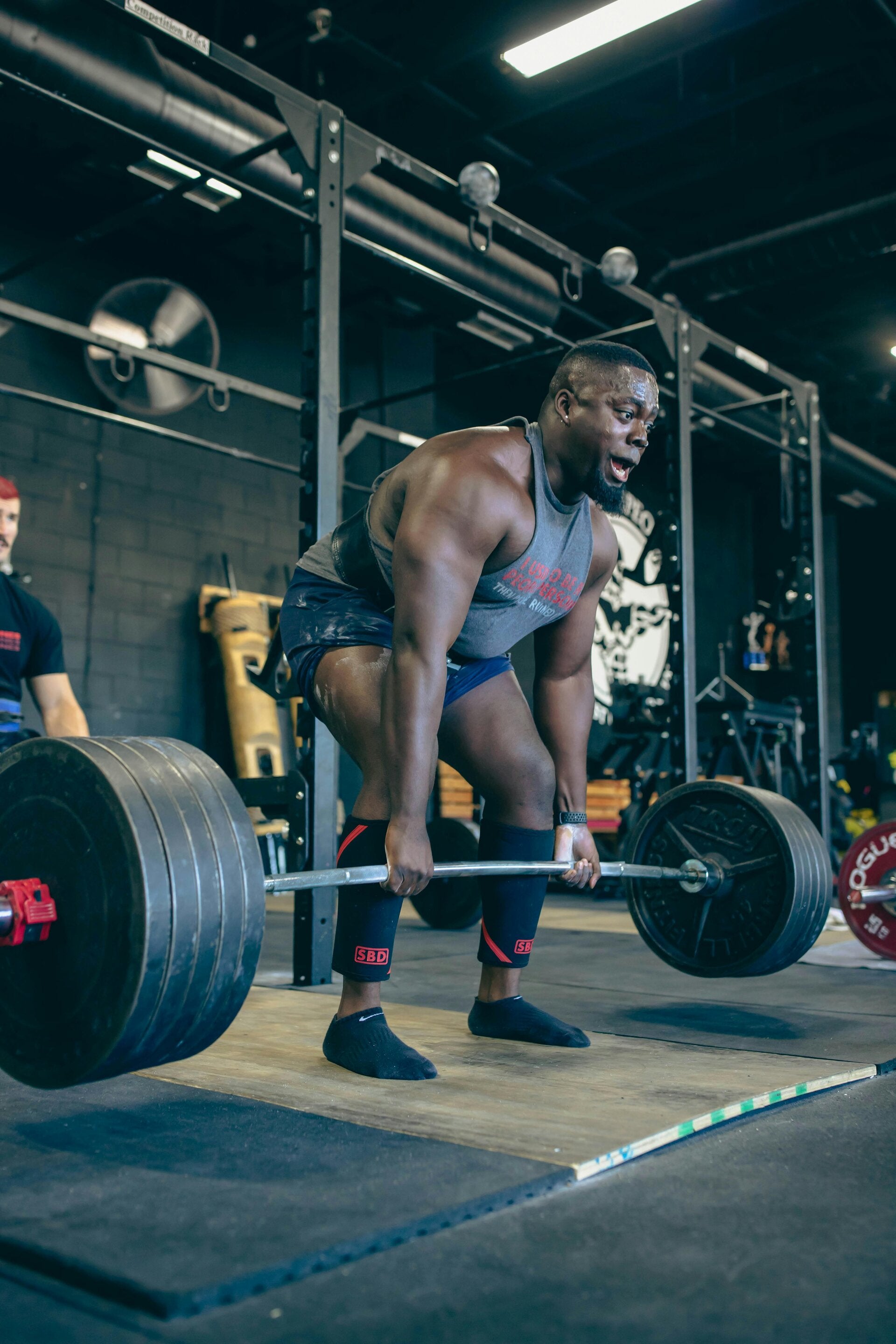
...But lifting wrong will hurt.
Alright, so this is more of a rant than a blog for those looking for a bite sized lesson. But don't fret, it's a rant because I feel the need to irradicate a false presumption many people, both gym newbies and veterans alike, seem to have at times. Ready?
Lifting heavy is not the reason someone injured themselves. Your first time deadlifting 315lbs didn't hurt your low back. Your lack of low back and/or core strength is what lead to a fault in your form and then caused some kind of injury, minor or major.
Like one of my favorite power lifting coaches in history, the late Louie Simmons, once said, "Weak things break."
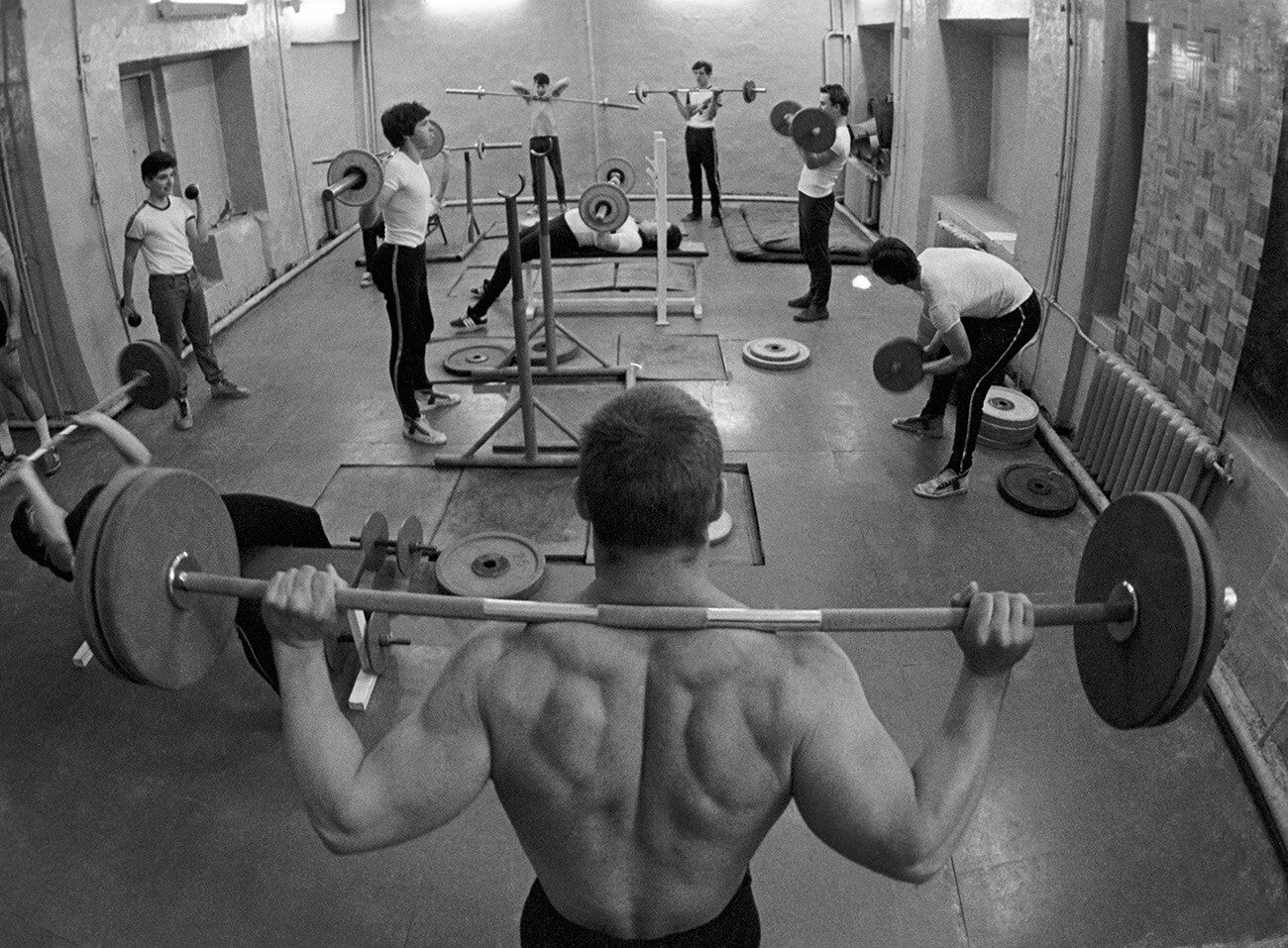
When I was a fitness manager at a commercial gym,
there was a gentleman I knew who you would consider a regular. He was about 60 years old at the time and his two 30-something year old sons would also join him from time to time. In fact, they later opened a local powerlifting gym in town that's still open today.
So needless to say, it was always good to find him on the gym floor and shoot the shit, especially if it was about fitness. But as most 60-something year old gym goers, he had plenty of past injuries. Hell, I'm half his age and I have a few of my own. Shit happens, ego takes hold, and we get hurt. A lot of that point is what the beginning of this post was regarding to. Weak muscles are ignored and heavy lifts are taken overboard because of, "Survey says.." EGO.
But I digress.
The One Time This Gentleman Grinded My Gears Though
was an evening just like any other; rush hour as a matter of fact. If you've never been lucky enough to be in a fitness facility between the hours of 4pn-7pm (also known as rush hour), it's an interesting little melting pot of all gym-goer subgenres. From your average middle aged woman who wants to lose weight by walking on the treadmill every day, to groups of four to six 20-something year olds cycling through a bench max for the 3rd time this month, to veteran studs who have been places and know the game but never seem to break a sweat because they gab between sets like a couple of golden girls at a cribbage table. Then you have to consider these subgenres co-mingling! Quite the community to see (and be a part of).
And in this community on this one evening, I turn the corner to find the aforementioned gentleman, who is always a delight to see, on the tail end of telling two or three teenage boys (very impressionable people who just wanna get as big and strong as Henry Cavill). The final line of the story, I assume regarding an injury, was I quote, "That's why you should never lift heavy, you'll fuck up your (insert joint or muscle of choice)."
I'm sorry sir but I think you forgot a few words that belong in your profound lesson. The moral should go something like, "That's why you should never lift heavy with poor form." or "That's why you should take time to train mobility and stability in your program." or even, "That's why you should always leave your ego at the door."
Unfortunately
for our older friend here and even myself, this lesson is usually learned the hard way. Which is all the more reason why we need to appropriate this fear mongering technique to target ego rather than heavy lifting. Maybe I'm being too petty about buff grandpa's lessons, but if you're going to make an impression on kids who may or may not remember what you told them for the rest of their lives, make sure you aren't telling them to "...never lift heavy."


God forbid
these kids are now out there no stronger and no bigger than they were when they were told to never lift heavy. This false ideology mirrors the myth of women becoming "manly" if they lift heavy.
We need to upgrade our thinking in two ways here:
1- Lifting heavy (no matter how many reps you're doing) is a necessity in order to challenge our central nervous system and muscular system which in turn will stimulate adaptation. ie- muscular growth and/or strength gains.
2- One of the most effective ways to lower the risk of injury during weight training is not by lifting lighter (assuming your form is near perfect) but to dedicate time in your program to strengthening what your weakest link is.
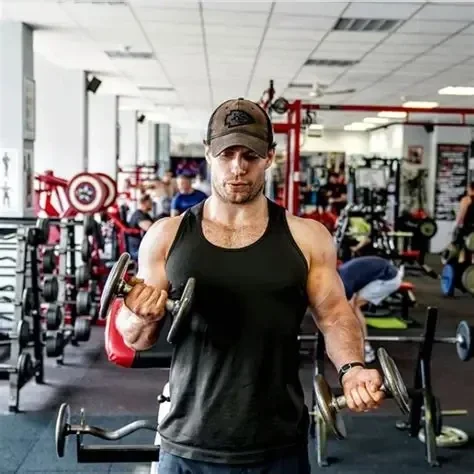
No One is Bullet Proof
Look at Henry not leading with ego.
I say to prioritize your weak points because maybe your gym bro has bad shoulder mobility and your dad has a bad back and your partner has tight hips but all you feel is a weird clicking in your knees when you squat and you can't quite break 90 degrees. I hope you aren't going to waste your time doing everything your gym bro, dad, and partner should be doing. You could look into ankle mobility to gain more range of motion in a squat and stretch your inner thighs and quads as well as do soft tissue work on your IT bands and shins to see if it helps the knees.
"What kind of injury would any of that be preventing?" You ask. Well, think of mobility and stability work as insurance on your body. Just because you don't feel pain yet, doesn't mean we should wait around for it to show up. A lack of depth in a squat may convince your low back to round or your torso to lean too far forward to grant you the proprioceptive illusion of getting lower. But behold, that would put your lumbar under immense load and could stress, strain, or tear a muscle or even lead to a spinal injury.
All because you didn't think much about your ankle mobility. Hell, maybe your dad made the same mistake.
Ok, one more since we're having fun now.
Your dad's ankles have a clean bill of health. Why does he have a bad back then? We've all heard it, "You need to do more core exercises."
Maybe! And if so, what kind?
It all depends on what the intolerance is, why it occurs, and to what degree.
You see, the spine can move (or not move) in four different ways, FOUR! Those are:
1- Flexion: Think of bending over to grab something.
2- Extension: Think of putting eye drops in, yeaaahh you know your back goes whack to get the perfect angle.
3- Rotation: Like swinging a baseball bat, tennis racket, golf club, etc.
4- Tilting: Think back to when you rocked those cargo shorts and you had to reach down into the side pouch for snacks. Those were the days huh?
What your dad needs to find out (once he's been cleared by a physician to exercise of course) is what movement(s) cause the pain. Let's run through it together:
1- If your dad feels pain when rounding his back (not getting into everyday life scenario changes) in the gym, he could strengthen his erectors more to help stabilize the spine, especially when having to reach for something. And speaking of stability, avoid crunches, instead try core stability exercises. Starting out easy with a plank variation.
2- Maybe it's extension that hurt. In this case, we can still strengthen the erectors, only, we need to find out if his hip mobility is causing over extension to begin with, but we'll have to save that process for another blog. 9/10 times he'll need to stretch his hip flexors and strengthen erectors and, you guessed it, improve core stability. But not with planks! Too often do we tend over arch their backs in a plank, especially if our hip flexors are tight. So instead start with a boat pose or dead bug variations.
3/4- Never mind, now its rotation, tilting, or both! These two are tricky because sometimes this is a matter caused by disc issues. Note that if it is, it isn't a death sentence. You'd be amazed what farmer's carries can accomplish.
AAANNY WAY
There was a lot of digression in this one but I don't apologize. I hope the ranting got the point across and the last half made up for the drama. In the end, I'm just a guy who wants everyone to experience the best part of their fitness journey: Accomplish everything they wanted with minimal injury.
Don't forget folks: lift heavy correctly and train your weakest links.
Add comment
Comments